

Be honest—when was the last time you gave your fridge a proper scrub? It’s one of those jobs we put off until something leaks, smells, or grows a life of its own in the veggie drawer. And who can blame us? Fridge cleaning doesn’t exactly scream ‘fun Saturday plans.’
But, here’s the thing: Your fridge works around the clock to keep your food fresh, your leftovers safe, and your milk from turning sour. So, it deserves better than being treated like the family’s dumping ground.
Want to know how to make it sparkle without spending hours hunched over it? Keep reading.
Gather Your Supplies
Before you dive in, do yourself a favour and get everything ready first. It’s amazing how quickly a cleaning session can grind to a halt when you realise you’re out of sponges or rubbish bags halfway through.
Start with the basics: a food-safe spray that won’t leave dodgy chemical smells behind, a few microfibre cloths, and some vinegar.
Microfibre is brilliant because it actually grabs grime instead of just pushing it around, and vinegar is the secret weapon for any strange odours clinging to the shelves.
You’ll also need a big rubbish bag. Trust us, once you start digging through jars and mystery leftovers, you’ll be glad it’s within arm’s reach. And while you’re at it, grab an old toothbrush for those stubborn corners.
As for your food, grab a cooler bag with a couple of ice packs. You definitely don’t want your milk to curdle on the counter while you’re scrubbing away.
Empty the Fridge
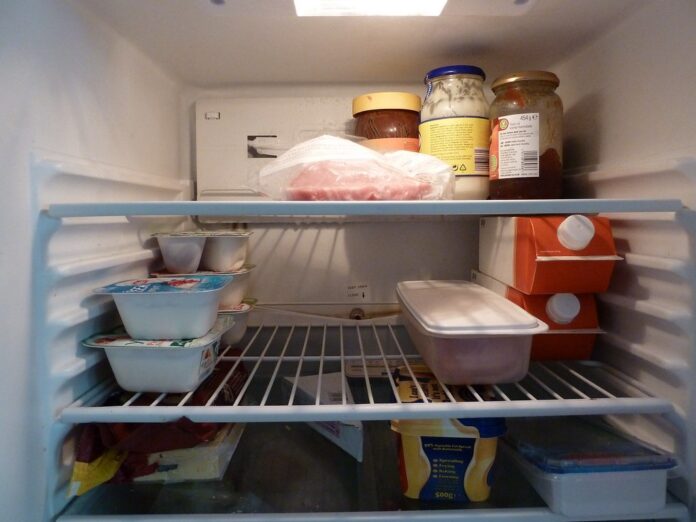
It’s time to face the music. Everything has to come out, including those half-used condiments and that suspicious block of cheese that’s been slowly drying out on the top shelf.
As you unload your fridge, check the products’ expiry dates. You’ll almost always find something that should’ve been binned months ago—sauces, yoghurt, or odd jars.
If it looks dodgy, smells weird, or makes you hesitate, don’t overthink it. Straight into the rubbish bag it goes.
Once the food is out of the way, slide out the shelves and drawers and set them aside. They’ll get their own proper scrub in the next step.
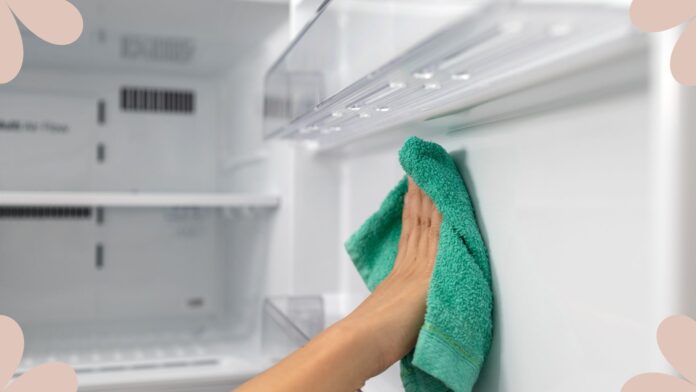
Now, you’ll probably spot spills you didn’t know existed. Leaks and sticky patches love to creep down the back wall or pool in the corners, quietly causing odours. So, make sure to wipe those up before moving on.
By the time you’ve hauled everything out and wiped up the worst of the leaks, your fridge will feel cleaner and far less intimidating.
Soak the Removable Parts
With your fridge emptied and the shelves out, let’s give those parts some love. Take every shelf and drawer over to the sink and let them soak in warm, soapy water. This will loosen up sticky patches, so you don’t have to spend ages scrubbing.
You’ll probably find a few stubborn patches where jam or sauce made a break for it. Those will need a gentle scrub.
A soft sponge or cloth is the way to go here. You might think that scouring pads are more effective, but all they really do is scratch surfaces and create little grooves that collect grime.
Now, here’s the part people rush: drying the shelves. If you slide damp drawers back in, you’ll only invite mould and bad smells. Instead, let everything air dry on a towel or rack before doing that.
Don’t Forget the Door and Seals
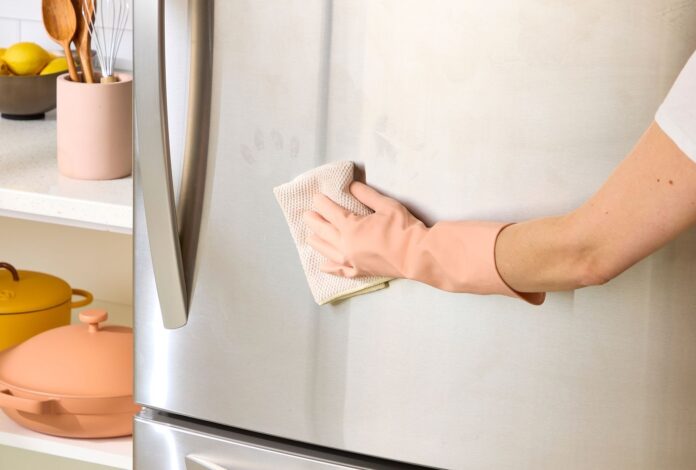
The inside might be sparkling, but don’t shut the door just yet. Those rubber gaskets are like magnets for crumbs, sticky drips, and the occasional mystery black speck.
Ignore them and you’ll end up with smells, mould, and a fridge that doesn’t seal properly.
Run a damp cloth with a bit of mild detergent along the folds of the seals. You’ll probably find more grime than you bargained for hiding in there.
The shelves and compartments on the door deserve the same love you gave the main shelves. Take them out, wash them in warm, soapy water, and let them dry properly before popping them back.
You’ll be amazed at how much fresher your fridge will look once even those little nooks and crannies are dealt with.
Sanitise All Surfaces
By now, your fridge should be looking pretty clean, but if you want to kick it up a notch, you can take 5 minutes to sanitise it.
This step is all about making sure you’ve cleared out the invisible bacteria, mould spores, and whatever else thinks your fridge is a holiday home.
To do this, pour one cup of white vinegar into a spray bottle with four cups of water. Give it a solid shake, and then spray it generously across every surface.
Let it sit for five minutes so it can break down grime and neutralise smells. Once the time is up, wipe everything down with a fresh cloth until it’s dry.
If your fridge has seen better days or you’ve recently experienced a surprise power outage, you can use a diluted bleach solution (about a teaspoon in a litre of water). Just make sure you rinse and dry everything well, so your fridge smells crisp, not like a swimming pool.
On the other hand, if you’re short on time or just want a professional touch, a cleaning company can step in and leave your fridge fully sanitised and sparkling, no effort required on your part.
Organise and Put Back Items
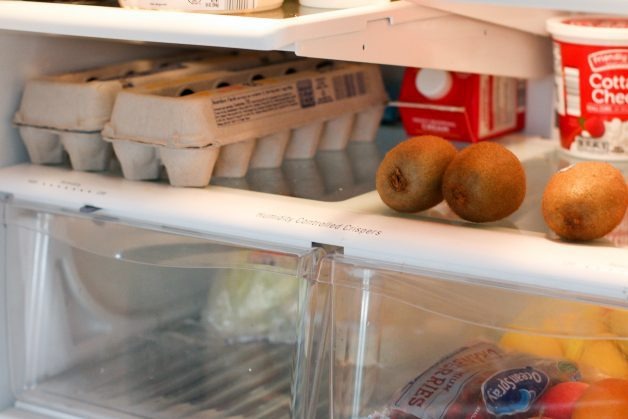
Here’s the part where you get to play fridge Tetris. Only this time, you’re actually allowed to win.
Shift the older items to the front and group things into clear tubs, so snacks, sauces, and leftovers are easy to spot instead of hiding in random corners.
And don’t forget to leave the vents clear. Cold air needs room to move, or your fridge will end up with hot spots that are going to turn your lettuce into mush overnight.
For peak freshness, set your fridge between 3°C and 4°C. It’s the sweet spot that will keep food safe without freezing your fruits or vegetables.
Conclusion
The hardest part is starting, so you’re already halfway there. Give it ten minutes and you’ll be chucking out the questionable jars, wiping down a shelf or two, and realising it’s nowhere near as bad as you thought.
Trust us, your fridge will look cleaner, your food will last longer, and you’ll get that little rush of excitement whenever you open the door and find everything in its place.