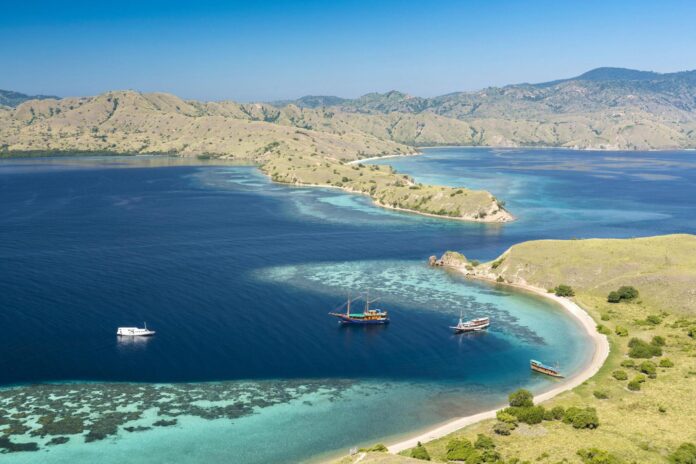
The Komodo Archipelago, part of Indonesia’s Lesser Sunda Islands, is far more than the home of the famous Komodo dragon.
Beyond the main islands of Komodo, Rinca, and Padar lies a scattered collection of hidden gems, untouched beaches, vibrant coral gardens, and isolated sailing routes that few travelers ever see.
The concrete truth is this: the most breathtaking parts of Komodo are not the ones on tourist maps, but the ones reached only by boat.
These hidden islands, often unnamed, hold some of Indonesia’s clearest waters and most biologically diverse reefs.
The Real Komodo Experience Lies Beyond the Main Islands
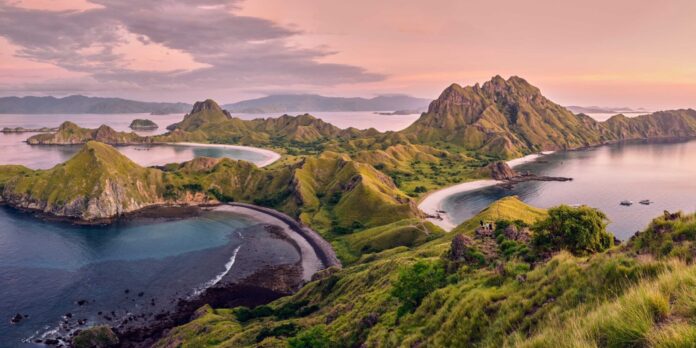
Most visitors follow the standard route: Labuan Bajo to Padar Island for the famous viewpoint, Komodo Island for the dragons, and Pink Beach for snorkeling. But those who venture farther discover a completely different side of the archipelago.
Around 80 smaller islets make up this maritime maze, each offering a unique landscape, from hidden coves with rose-tinted sand to limestone cliffs plunging into turquoise lagoons.
Sailing is not just a mode of transport here; it’s the only way to explore this true frontier. The lesser-known islands of Sebayur, Kanawa, Gili Lawa Darat, and Siaba Besar form the heart of Komodo’s secret world.
They are ideal for anchoring, swimming, and discovering reefs so alive that even the air feels electric with marine life.
Hidden Beaches Few Ever See
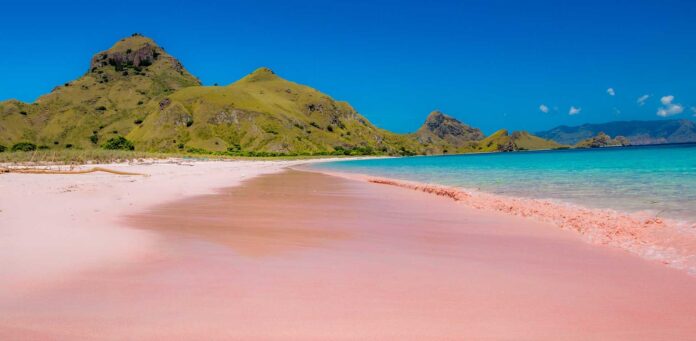
Some of the most pristine beaches in Komodo are not on Komodo or Rinca at all. Kanawa Island, for example, has beaches so fine that the sand almost reflects the sunlight like powdered glass. Early morning visits reveal small reef sharks gliding in the shallows and sea turtles feeding near the coral fringe.
Another secret lies to the south, the uninhabited island of Mawan. Here, the beach curves around a small bay where manta rays circle almost every afternoon.
The currents bring plankton-rich waters close to shore, making Mawan one of the easiest places to spot these gentle giants without diving deep.
In contrast, Gili Lawa Darat, located north of Komodo Island, offers a completely different setting: hills covered in golden savanna grass, best explored at sunset.
From the ridge, the view stretches across deep-blue channels where dolphins often break the surface.
| Island | Known For | Access | Best Time to Visit |
| Kanawa | White sands, shallow reefs | 1 hour by boat from Labuan Bajo | April–October |
| Mawan | Manta ray snorkeling | 2 hours by boat | May–September |
| Gili Lawa Darat | Hills and sunset treks | 3 hours by boat | June–August |
Coral Gardens Beneath the Waves
Komodo National Park is part of the Coral Triangle, the global epicenter of marine biodiversity. In simple terms, that means nowhere else on Earth packs this much life into one stretch of sea. Beneath the waves around these lesser-known islands are coral gardens that remain almost completely untouched.
Sebayur Kecil is one of the most spectacular examples. The reef drops sharply into a vertical wall coated with sea fans, soft corals, and schooling fish.
Visibility often exceeds 30 meters, and divers frequently encounter turtles, reef sharks, and even pygmy seahorses.
Further east, Siaba Besar is a snorkeler’s paradise, where gentle currents weave through coral fields teeming with clownfish and parrotfish.
This site has earned the nickname “Turtle City” because of the dozens of green turtles that feed on the surrounding seagrass beds daily.
| Dive Site | Type | Depth Range | Typical Marine Life |
| Sebayur Kecil | Wall dive | 5–30 m | Reef sharks, turtles, sea fans |
| Siaba Besar | Drift/snorkel | 3–15 m | Turtles, clownfish, parrotfish |
| Mawan Reef | Cleaning station | 5–20 m | Manta rays, trevally, wrasses |
Sailing Routes That Reveal the Archipelago’s Soul
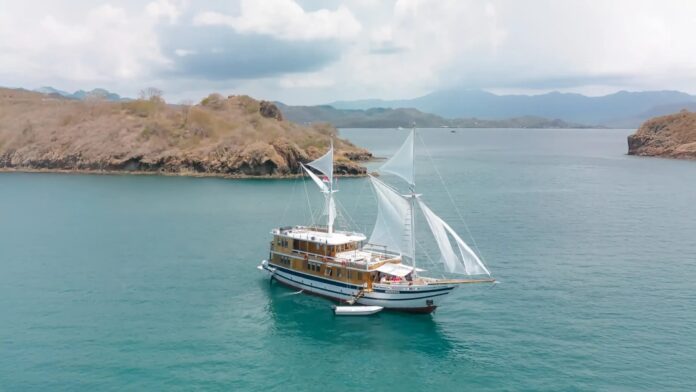
To reach these secret spots, travelers typically begin in Labuan Bajo, the gateway port on Flores Island. From here, routes vary depending on weather and tides, but the most rewarding journeys combine both the northern and southern reaches of the park.
A common sailing loop starts northward from Labuan Bajo toward Sebayur and Kanawa, then curves around to Gili Lawa and the Komodo Channel before heading south to Mawan and Padar. Each segment offers different landscapes and underwater conditions: calm lagoons in the north and nutrient-rich, manta-filled waters in the south.
The central truth about exploring Komodo is that no single itinerary captures it all; flexibility is key. Many travelers choose to chart custom sailing routes aboard a luxury private yacht in Indonesia, not for extravagance but for access.
Such vessels allow travelers to reach secluded anchorages where no day boats venture and to spend nights under the stars in total solitude. This approach transforms the journey from sightseeing into immersion, waking up at sunrise to swim alone in a hidden bay or diving on reefs that have never seen a crowd.
When to Go and How to Prepare
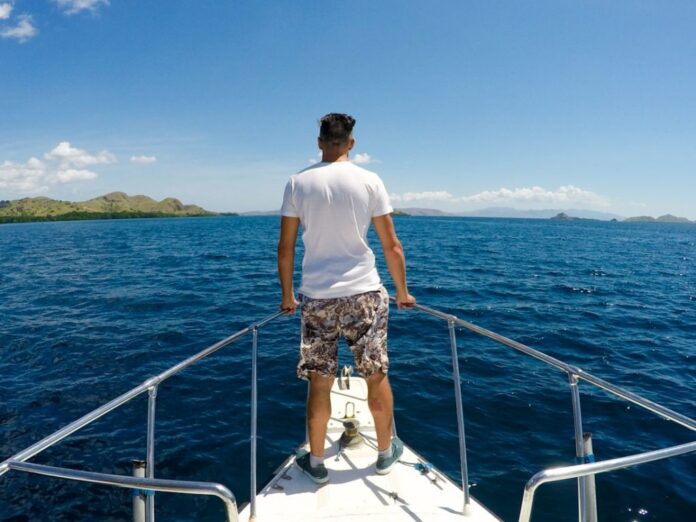
The best time to sail through Komodo’s hidden islands is during the dry season, from April to November. During these months, visibility is excellent, winds are predictable, and seas remain calm. From December to March, the monsoon brings heavy rain and occasional closures of certain areas due to strong currents.
Travelers should always respect the marine park regulations, no fishing, coral collection, or anchoring oinreef zones. Most liveaboard and yacht operators follow sustainable practices, but it’s wise to verify their credentials before departure.
Packing should focus on functionality: reef-safe sunscreen, a dry bag, light clothing, a snorkeling mask that fits well, and sturdy footwear for trekking on the volcanic terrain.
Why These Islands Matter
The Komodo Archipelago is a reminder that adventure still exists in the 21st century. These islands remain wild not because they are inaccessible, but because they are protected. Even with increasing tourism, the park’s remote corners preserve the delicate balance between human curiosity and nature’s resilience.
Every hidden island adds another layer to the story of Komodo, from the whisper of seagrass in Turtle City to the coral glow at Sebayur’s drop-off. The deeper you explore, the clearer the truth becomes: the real magic of Komodo lies not in its famous dragons, but in the silent, sunlit waters between the islands.