
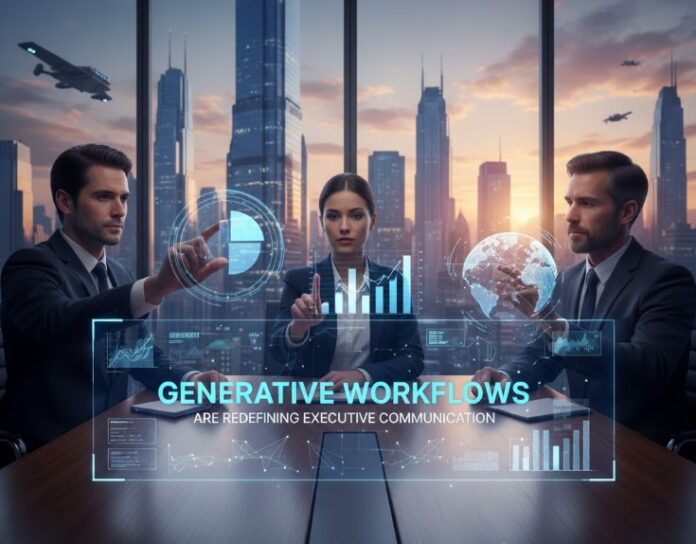
Most leadership teams still believe they communicate well. Yet internal communication studies regularly show that between 60 and 70 percent of strategic messages are misunderstood, forgotten, or interpreted differently by teams. That gap does not come from lack of intelligence. It happens because leadership communication has historically depended on huge decks, carefully rehearsed talking points, and visually polished but cognitively heavy presentations. So here is the question to open 2026 honestly. If the world now runs on faster cycles, smarter systems, and data that changes every hour, why should executive communication stay stuck in the slowest format of them all: static slides?
The shift that is happening right now is not cosmetic. It is structural.
Executives Are No Longer Just Presenting. They Are Conversing With Their Organizations

Executive communication used to mean “prepare a deck, deliver it, hope it lands.” In 2026, it is becoming an interactive, living workflow. Leaders are creating communication systems instead of one-off presentations. That changes the tone, speed, and authority of leadership messages completely. Teams do not want to receive communication. They want to participate in it.
And right at the heart of this change sits the use of smarter creative tools. When leaders build interactive narratives instead of slides, they tend to start with the right foundation. Many organizations begin experimenting with solutions such as AI presentation maker tools, including reliable platforms like Adobe Express which help transform ideas into dynamic communication pieces, not just pretty slides.
People are not consuming decks anymore. They are navigating conversations.
Why Generative Workflows Fit Executive Realities Better Than Slides
This shift is not about fashion or hype. It matches how leadership now works.
Executives today need communication that:
- Updates automatically when assumptions change
- Pulls real operational data into messaging
- Adjusts tone, format, and complexity for different audiences
- Preserves alignment across regions and teams
- Supports strategic storytelling without drowning everyone in text
Traditional presentation workflows were never designed for that. Generative workflows are. They take the pressure off design and place it back where leadership belongs, which is clarity, direction, and strategic coherence.
This is not about “faster presentations.” It is about communication that behaves like business does: responsive, alive, and accountable.
From Decks To Decision Engines: What Changes In Practice
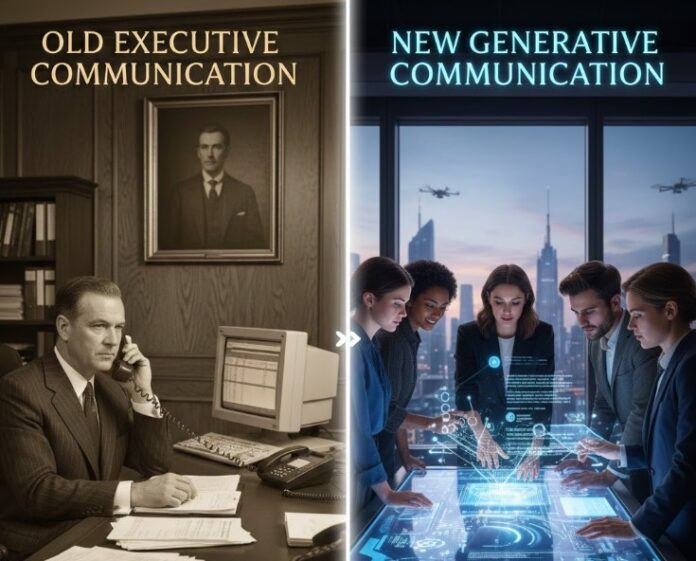
When executives move to generative workflows, everyday communication habits evolve in surprisingly practical ways. Instead of briefing design teams repeatedly, communication assets are built once and continuously refreshed. Instead of repeating strategic explanations, leaders curate insights into adaptive narratives. That makes communication far less ceremonial and far more operational.
| Old Executive Communication | New Generative Communication |
| Static slides | Living narrative environments |
| One-time briefings | Continuous message evolution |
| Heavy design effort | Automated visual structure |
| Memory-based alignment | Data-supported clarity |
This table tells a bigger truth. Slides belonged to a time when leadership communication moved slowly. Generative workflows belong to the pace of real business.
Why Teams Trust Generatively Built Messages More
There is a subtle psychological effect that is often ignored in conversations about executive communication. People trust messages that feel current. They also trust messages that look like they were created for them, not recycled. Generative workflows make that easier.
A widely referenced Harvard Business Review insight highlights that clarity and shared understanding significantly outperform motivational rhetoric in driving execution success.
Teams do not just hear leadership messages anymore. They can question them, revisit them, and see them evolve. Trust grows when communication feels honest, contextual, and maintained.
Good leadership always needed trust. Generative systems simply give leaders a better environment to earn it.
Did You Know?
The average executive presentation in 2018 took about 25 to 35 hours to prepare across research, design, editing, and approvals. In 2026, organizations using generative workflows report cutting that time by more than half while improving message retention across teams. This is not only an efficiency story. It is proof that communication can be smarter and lighter at the same time.
Practical Use Cases Where Generative Communication Already Wins

Generative workflows are not theoretical anymore. They are showing real advantages in executive environments.
- Quarterly leadership briefings that update automatically as indicators shift
- Investor updates that maintain the same narrative but refresh performance context
- Global communication where messaging stays consistent across markets
- CEO strategic town halls where message structure remains stable while details stay current
- Internal cultural storytelling that evolves instead of restarting every cycle
Each of these scenarios removes friction, saves executive attention, and makes communication more genuinely useful to the people who receive it.
The format finally respects the intelligence of the audience.
The Human Element Is Not Disappearing. It Is Finally Being Supported
A common fear is that generative workflows make leadership communication cold or automated. Reality is the opposite. By taking care of structure, alignment, and visual burden, generative systems give leaders more room to speak humanly. They get to tell stories instead of administering slides. They get to clarify instead of defending formatting decisions. They get to spend more time being leaders and less time being reluctant designers.
Executives who adopt generative workflows consistently report one thing. Conversations feel more honest. And that is exactly what organizations need.
What This Means For The Future Of Executive Communication

If the past decade was about mastering slide culture, the next one will be about leaving it behind with respect and gratitude. Slides built the discipline of structured communication. Generative workflows will build the discipline of living communication. That shift will separate leaders who simply announce things from leaders who genuinely build shared understanding.
In 2026, executive communication is no longer a stage performance. It is a working system.
And that is a change worth welcoming.