

Embarking on a journey to become a helicopter pilot necessitates a profound understanding of the helicopter’s anatomy. Unlike fixed-wing aircraft, helicopters possess a unique design and functionality that allows for vertical takeoff, landing, and hovering. The primary components hovering blades, tail rotor, fuselage, engine, rotor systems, and landing gear are central to understanding how a helicopter operates.
The rotor system, comprising the main rotor blades that spin around a mast, is pivotal for creating lift. The angle and pitch of these blades can be adjusted to control the helicopter’s altitude and movement. The tail rotor, on the other hand, counteracts the torque generated by the main rotor, ensuring stability and directional control.
Aspiring pilots must familiarize themselves with these components, including how they interact during flight, to understand the dynamics of helicopter operation fully.
Flight Controls and Avionics ─ A Pilot’s Best Friends

Modern helicopters are equipped with advanced flight controls and avionics that enhance pilot capability and flight safety. Flight controls typically comprise the cyclic stick, collective lever, and anti-torque pedals. The cyclic allows the pilot to direct the rotor and, consequently, control the helicopter’s forward, backward, and lateral movements.
The collective, actuated by raising or lowering, changes the pitch of all rotor blades simultaneously to manage lift. The anti-torque pedals manipulate the tail rotor’s pitch, enabling the pilot to maintain the desired heading. In today’s aviation landscape, avionics such as GPS navigation, communication systems, and autopilot technology play an essential role in the efficiency and convenience of flying.
Understanding these systems is crucial for pilots, as they not only enhance the flying experience but also ensure adherence to safety protocols and operational compliance.
The Role of Hydraulics and Electrical Systems in Modern Helis
Hydraulic and electrical systems are the unsung heroes of any helicopter’s operation, providing the necessary power and control to execute precise maneuvers. Hydraulic systems, essential for amplifying the pilot’s control input, assist in various operations, including rotor blade movement, landing gear deployment, and cargo handling.
The hydraulic system provides the necessary force to command heavy components seamlessly, allowing pilots to handle the helicopter efficiently. Furthermore, electrical systems manage avionics operations, cabin lighting, and instrumentation, offering real-time data about the helicopter’s performance.
A robust understanding of these systems, their maintenance, and their emergency protocols is imperative for every aspiring pilot all vital aspects not just during training but throughout a flying career, ensuring that they can address issues promptly and efficiently should they arise mid-flight.
Choosing the Right Training Course ─ Your Path to the Skies
Types of Helicopter Training Programs ─ Finding Your Fit
Choosing the ideal helicopter training program is crucial to shaping your flying career. Various courses cater to different aspirations and expertise levels. Private helicopter pilot licenses (PPL) provide foundational training, focusing on basic flight operations and safety protocols.
Many students also benefit from helicopter systems training courses, which enhance their understanding of aircraft components and operational procedures. This is often followed by instrument rating (IR) training, which equips aspiring pilots with the skills to navigate under various weather conditions.
For those eyeing a professional career, commercial pilot licenses (CPL) offer advanced training, with a focus on flight maneuvers, complex helicopters, and aerial work. For experienced pilots, type ratings allow for specialization in specific helicopter models, catering to operational nuances and performance characteristics.
Each program has distinct requirements and durations; thus, thoroughly assessing your career goals, available time, and resources, including financial commitments, is essential when making this decision.
What to Look for in a Flight School ─ Accreditation and Beyond
Finding the right flight school is critical in your pursuit of becoming a helicopter pilot. One of the first considerations should be accreditation; schools accredited by recognized aviation authorities, such as the Federal Aviation Administration (FAA) or the European Union Aviation Safety Agency (EASA), indicate quality training standards.
Furthermore, potential students should consider the school’s fleet; modernizing equipment ensures exposure to the latest technology, enhancing learning outcomes. Instructor qualifications also matter a school should boast experienced, certified instructors with diverse backgrounds in aviation.
Beyond these factors, the school’s safety record, student reviews, and overall reputation in the aviation community play essential roles. Visiting the school, interacting with current students, and sampling introductory flights can further provide insights into the school’s environment, ensuring a well-rounded decision that aligns with your learning style and career aspirations.
Cost vs. Quality ─ Investing in Your Helicopter Pilot Future
When contemplating a helicopter training program, understanding the cost versus the quality of education is imperative. Helicopter training can be a significant financial investment, with costs ranging from tens of thousands to over a hundred thousand dollars, depending on the program’s scope and the aircraft used. While it may be tempting to hop on the most cost-effective option available, it’s essential to weigh the potential ramifications regarding the quality of the training provided.
Lesser-known schools may offer lower prices, but this can frequently come at the expense of instructor experience, technology, and overall training efficacy. Graduating from a reputable school often results in better job opportunities and higher earning potential in the long run.
Therefore, a comprehensive assessment of training value accounting for direct costs, potential debt, and anticipated career returns is necessary to make an informed choice that promises a sound investment towards your dreams of soaring through the skies.
Flight Training Essentials ─ Gaining Proficiency and Confidence

Ground School ─ The Crucial Knowledge Base Every Pilot Needs
Ground school is a foundational element in helicopter pilot training, offering crucial theoretical knowledge that underpins practical flight skills. Topics covered in ground school include aerodynamics, navigation, meteorology, regulations, and aircraft systems. Understanding the principles of flight, particularly as they relate to helicopters, is essential to mastering in-flight maneuvers and making informed decisions.
Students also learn about safety protocols, emergency procedures, and aircraft performance metrics knowledge critical in ensuring safe operational practices. Ground school often employs a mix of lectures, hands-on demonstrations, and interactive simulations, which aids in cementing the information learned.
As you advance to flight training, the concepts acquired in ground school become vital in fostering a deeper comprehension of the real-time decisions and analyses required during actual flight operations.
Simulator Training ─ Bridging the Gap Between Theory and Practice
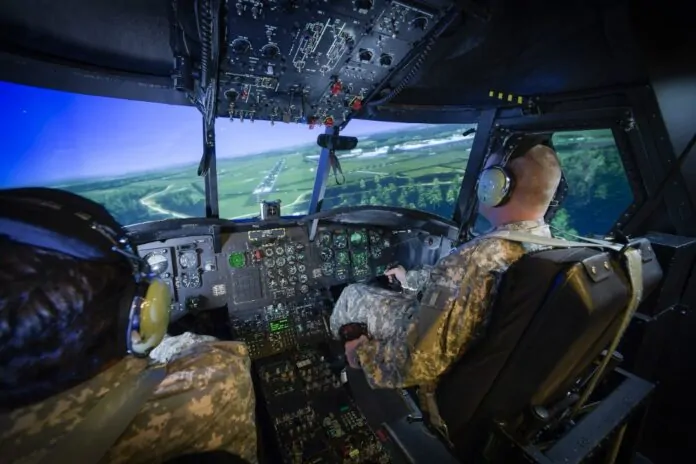
Simulator training plays a pivotal role in cultivating the skills of helicopter pilots, offering a safe, structured setting to practice maneuvers and experience various in-flight scenarios without leaving the ground.
Advanced helicopter flight simulators replicate the full flight experience, including controls, instrumentation, and environmental factors, allowing pilots to develop muscle memory and real-time decision-making skills.
By engaging in simulated flight experiences, students can practice emergency situations, such as engine failures or system malfunctions, which is often too risky to replicate during actual flights. Such exposure not only boosts confidence but also prepares pilots for lesser-known circumstances that could arise during real-world operations, reinforcing their ability to manage stress and think critically under pressure.
Ultimately, simulator training is an invaluable complement to practical flight training, enhancing proficiency and readiness for actual cockpit experiences.
In-Flight Training ─ Building Skills in Real-World Conditions
In-flight training encapsulates the tangible aspect of becoming a helicopter pilot, offering opportunities to apply theoretical and simulated knowledge in real-world scenarios. This practical experience, usually delivered through dual instruction, allows students to develop essential flight skills under the supervision of experienced instructors.
Throughout the training, aspiring pilots learn to manage communications, adhere to air traffic control directives, and safely execute various maneuvers, including hovering, takeoffs, landings, and navigation in diverse weather conditions.
Consistency and practice are key during this stage, as individuals refine their techniques and responsive behaviors. In-flight training not only hones piloting dexterity but also cultivates judgment making critical decisions in turbulent conditions, complying with regulations, and prioritizing safety, transforming students from novices into capable, confident aviators equipped to face the skies independently.
After Training ─ Navigating Your Helicopter Piloting Career

Networking and Mentorship ─ Building Connections in the Aviation Community
As you transition from training to your flying career, the significance of networking and mentorship cannot be overstated. The aviation community thrives on relationships; strong connections can lead to potential job opportunities, valuable resources, and guidance through your career journey.
Participating in aviation workshops, seminars, and industry conventions allows you to meet seasoned professionals, while social media platforms such as LinkedIn provide a virtual avenue to build a network.
Additionally, seeking a mentor who can provide insights and support along the way can enhance both technical skill development and career growth. These relationships often create opportunities to gain invaluable experience through internships, part-time flying positions, or industry-relevant projects.
Investing in networking and mentorship is as vital as formal training, as these connections can significantly impact a pilot’s career trajectory and longevity in the aviation field.
Advanced Certifications ─ Taking Your Skills to the Next Level
After obtaining a basic pilot license, pursuing advanced certifications can be transformative in broadening your future recruiting opportunities and enhancing your skill set. Options include obtaining an instrument rating, which enables you to fly in diverse weather conditions, and a commercial pilot license, paving the way for a career in aviation.
Additionally, specialized certifications exist, like flight instructor, airline transport pilot (ATP), or type ratings for specific aircraft, allowing for career diversification. As the aviation industry continues evolving with increasing technological advancements, staying relevant through continued education and certification is essential for maintaining competitiveness.
Advanced certifications often open doors to significant roles across various sectors, including emergency medical services, law enforcement, and tourism, effectively broadening your operational horizons while enhancing your marketability within the aviation marketplace.
Job Opportunities and Career Paths for Helicopter Pilots
The career paths available to helicopter pilots are as diverse as they are exciting. Once trained and certified, you may find opportunities in various sectors including commercial services, air ambulance deliveries, agricultural flying, aerial photography, and transportation services.
Those seeking high-impact roles can explore positions with law enforcement agencies or search and rescue teams. Additionally, the burgeoning field of drone operations is creating new horizons, significantly altering landscapes across multiple industries. International opportunities also abound, with pilots often required for roles in locales needing specialized flying skills.
Potentially lucrative sectors such as offshore oil rig support or wildlife survey operations could provide thrilling experiences in unique environments. As the demand for skilled helicopter pilots continues to grow, focusing on niche skills and advanced qualifications can significantly enhance job prospects and career satisfaction.