
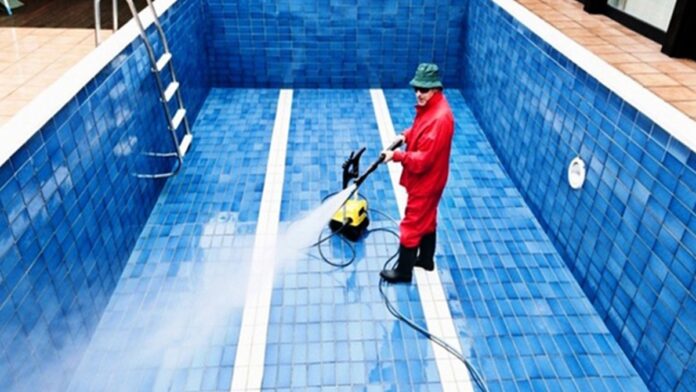
A swimming pool looks simple on the surface. Clear water. Calm reflections. Quiet afternoons. Underneath, though, every healthy pool runs on routine. Weekly service visits keep equipment alive, water safe, and expensive repairs away.
Homeowners rarely see half the work that goes into keeping a pool stable week after week. A solid service checklist turns that invisible labor into predictable results.
Below is a complete field-tested guide covering what every professional pool technician should handle on each visit, along with why each step matters.
Why Consistent Pool Service Visits Matter
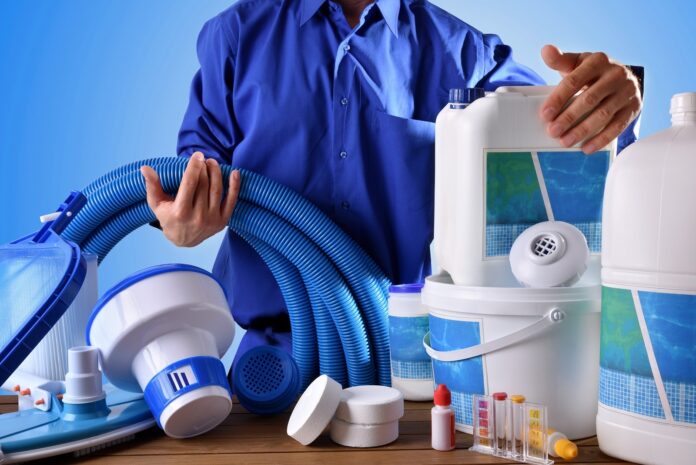
Skipping steps during a service visit almost always shows up later. Cloudy water. Staining. Failing pumps. Algae outbreaks that appear overnight.
Consistent maintenance prevents those surprises and keeps chemistry, circulation, and filtration working together the way they should.
Good technicians follow a repeatable process. Every pool, every week.
The Core Responsibilities of Every Pool Technician
Initial Walk-Around Inspection
Every visit begins with a visual check of the entire system. Five minutes of observation can reveal problems before they become repairs.
Key items a technician should examine:
| Area | What Gets Checked | Why It Matters |
| Water surface | Leaves, insects, debris | Debris affects circulation and chlorine demand |
| Pool walls and floor | Algae spots, stains, scale | Early detection keeps cleaning simple |
| Equipment pad | Leaks, noise, vibration | Prevents pump or plumbing failure |
| Pool deck | Cracks, standing water | Signals drainage or structural issues |
| Tile line | Calcium buildup, grease | Prevents permanent staining |
Small changes in sound, pressure, or water movement often reveal problems long before equipment shuts down.
Skimming, Brushing, and Debris Removal
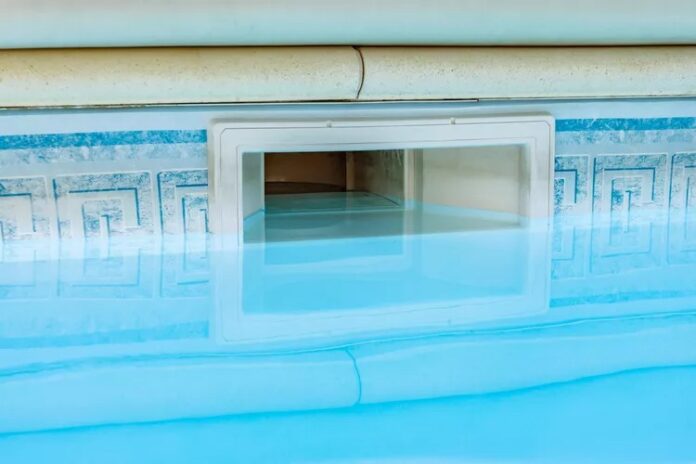
Surface Skimming
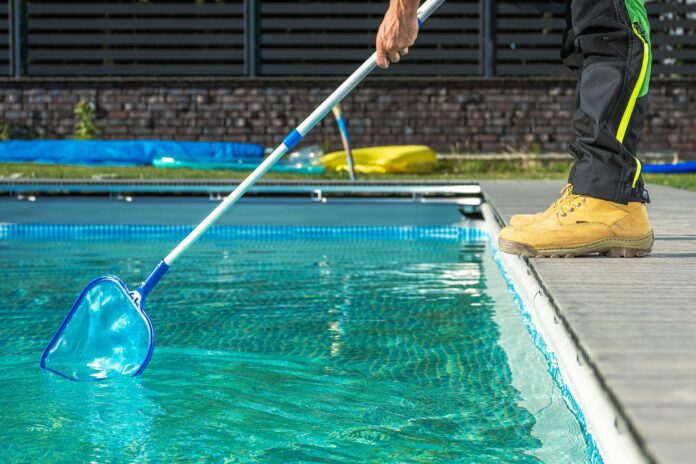
Skimming removes floating debris before it sinks and decomposes. A proper skim reaches every corner, step, and waterline area. Leaves left behind increase chlorine demand and stain surfaces.
Brushing Walls and Floor
Brushing breaks up algae films and loosens dirt for the filter to capture. Each visit should include:
- Walls
- Steps
- Benches
- Waterline tile
- Behind ladders and handrails
Concrete pools require stiff brushes. Vinyl and fiberglass surfaces need softer bristles to prevent damage.
Vacuuming
Some debris settles too quickly for skimming alone. Vacuuming removes fine sediment, pollen, and dust that cloud water and clog filters. Even pools with robotic cleaners still benefit from manual vacuum passes.
Water Chemistry Testing and Adjustment
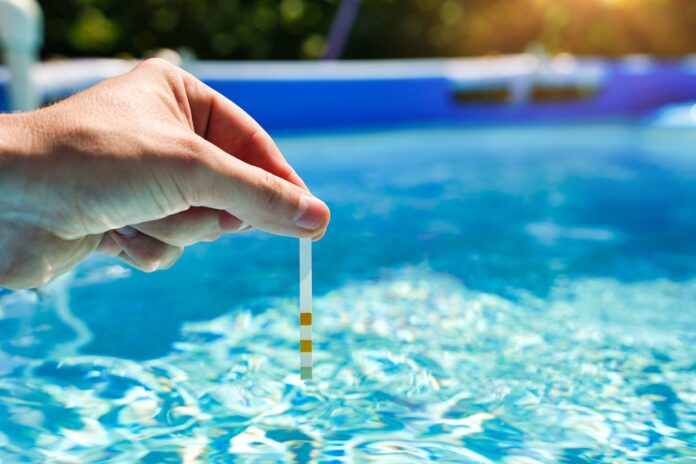
Water chemistry acts as the foundation of pool health. Every visit includes testing and balancing.
Standard Weekly Test Panel
| Parameter | Ideal Range | Why |
| Free chlorine | 1.5 to 3.0 ppm | Sanitises water |
| pH | 7.4 to 7.6 | Comfort and equipment protection |
| Total alkalinity | 80 to 120 ppm | pH stability |
| Calcium hardness | 200 to 400 ppm | Surface protection |
| Cyanuric acid | 30 to 50 ppm | Chlorine efficiency |
Technicians adjust levels using acid, soda ash, baking soda, calcium chloride, stabiliser, or liquid chlorine based on readings.
Balanced water prevents corrosion, scaling, cloudy conditions, and swimmer irritation.
Filtration System Maintenance
Filter Inspection
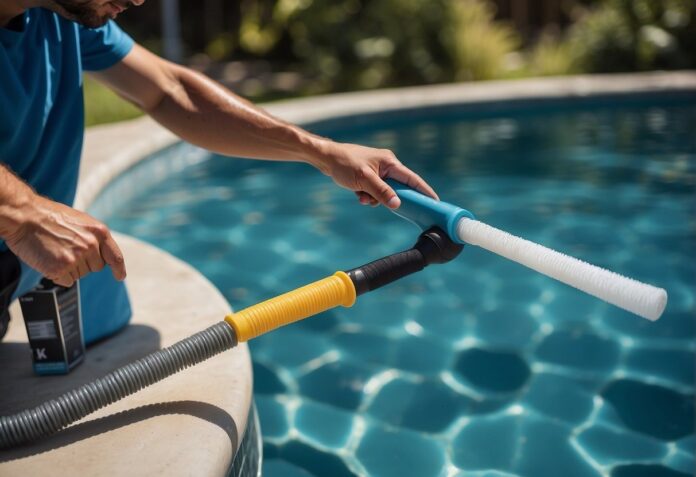
Every visit includes a pressure gauge check. Rising pressure signals dirty media. Low pressure suggests blockage or pump issues.
Filter types require different care:
| Filter Type | Service Routine |
| Sand | Backwash when pressure rises 8 to 10 psi |
| Cartridge | Rinse or deep clean as needed |
| DE | Backwash and recharge with fresh DE |
A clogged filter strains pumps, increases electricity costs, and reduces circulation.
Pump and Motor Review
Technicians listen for grinding, whining, or cavitation sounds. Pump baskets get emptied, lids inspected, and seals checked for leaks. Water flow should appear steady and strong.
Equipment Pad Examination
Every piece of equipment interacts with the rest of the system. One faulty valve can create multiple problems downstream.
Checklist for Equipment Pad
| Component | Inspection Focus |
| Pump | Leaks, noise, overheating |
| Filter | Pressure, cracks, and clamp condition |
| Heater | Rust, exhaust blockages, error codes |
| Valves | Smooth movement, leaks |
| Chlorinator | Clogs, buildup |
| Automation | Program settings, sensor readings |
Water leaks or unusual vibrations almost always appear here first.
Tile Line and Surface Care
Oils, sunscreen, calcium, and airborne contaminants accumulate at the waterline. Regular wiping prevents permanent staining.
Technicians use tile brushes and mild cleaners to keep the line bright. Acid washing is reserved for major scaling issues, since aggressive acid exposure shortens surface life.
Algae Prevention and Treatment
Algae forms when sanitation, circulation, or filtration slips out of balance. Each visit includes:
- Checking shaded areas
- Brushing any visible growth
- Maintaining a consistent chlorine residual
- Applying preventative algaecide when appropriate
Early treatment stops outbreaks before the water turns green.
Seasonal Considerations During Visits
Summer Load Adjustments
Higher temperatures and swimmer load demand more chlorine and more frequent cleaning. Technicians may increase circulation time and sanitizer levels.
Fall and Spring Transitions
Leaves and pollen raise the organic load. Technicians monitor filter pressure closely and increase vacuum frequency.
Winter Visits
Even closed pools require inspections. Covers get checked for debris and water accumulation. Equipment protection remains critical during freezes.
Mid-Visit Customer Communication
Clear communication builds long-term relationships. Homeowners appreciate quick updates.
Topics technicians often discuss:
- Chemical adjustments made
- Equipment concerns
- Upcoming service needs
- Water quality changes
A reliable service provider such as Dolphin Pool service keeps homeowners informed while maintaining consistent technical standards across every visit.
Record Keeping and Documentation
Every visit should leave a record. Professional logs include:
| Entry | Purpose |
| Date and time | Service verification |
| Chemical readings | Trend tracking |
| Chemicals added | Water balance control |
| Equipment notes | Repair planning |
| Observations | Preventive action |
Documentation protects both technician and client and keeps the service history clear.
Final System Check Before Leaving
Before closing the gate, technicians perform one final loop:
- Water appearance
- Equipment running properly
- Valves returned to correct positions
- Cleaner reinstalled and operating
- Gates secured
Five extra minutes prevent return trips and service calls.
Conclusion
A well-maintained pool stays healthy because every visit follows a disciplined process. Skimming, brushing, testing, adjusting, inspecting, documenting. Week after week, small details protect water quality, equipment lifespan, and swimmer safety. A strong checklist keeps service consistent and predictable, which keeps pools clear, comfortable, and ready for every season.