
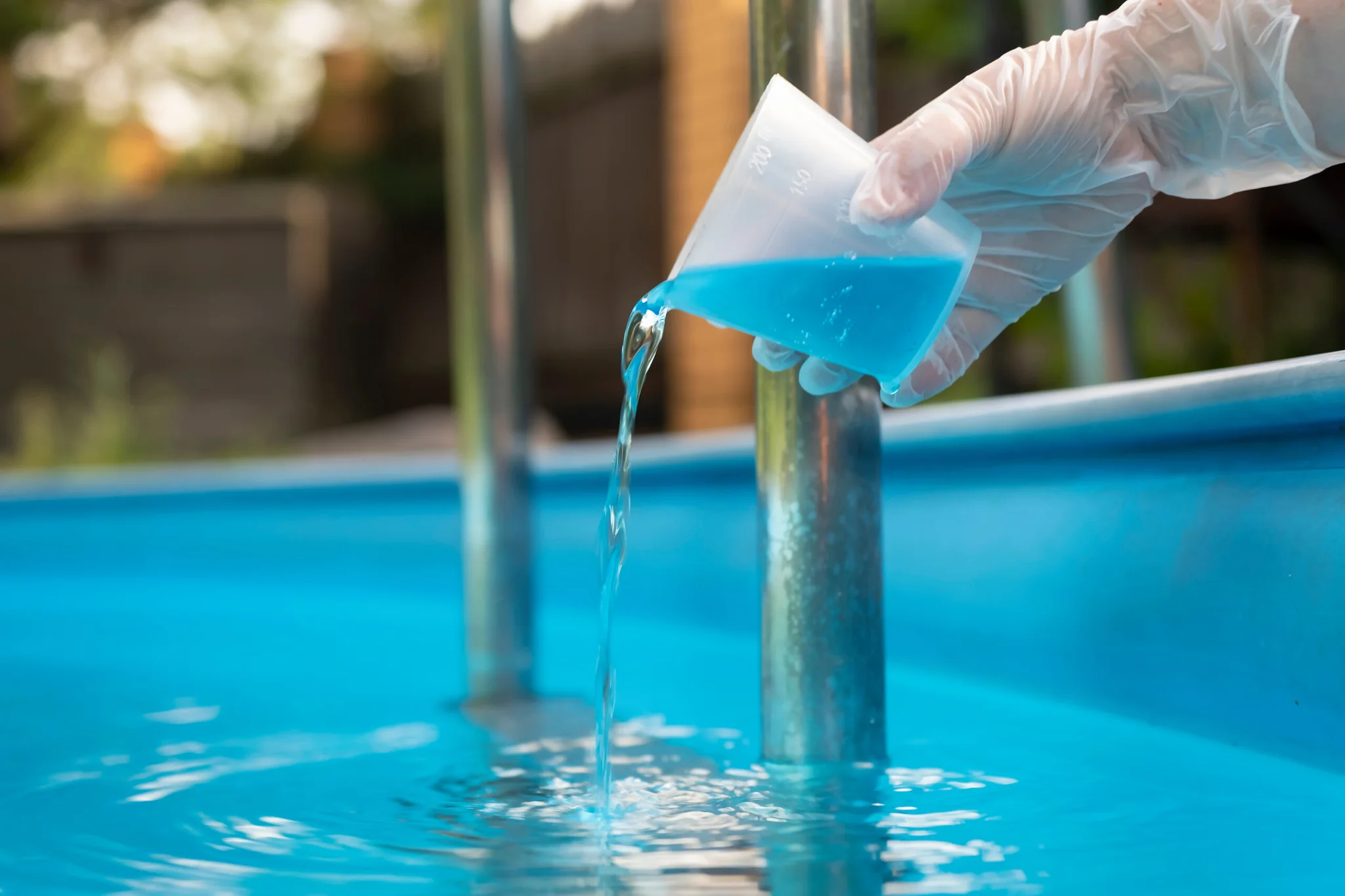
Pool water has a personality. Some days it feels crisp and perfect. Other days it smells sharp, looks cloudy, or leaves skin itchy.
Every one of those moods traces back to chemistry. Four main characters run the show: chlorine, pH, alkalinity, and calcium. Get their balance right, and swimming stays comfortable, safe, and easy to maintain. Let them drift, and problems multiply fast.
A little knowledge here saves real money and plenty of frustration.
Why Pool Chemistry Matters More Than Most Owners Expect
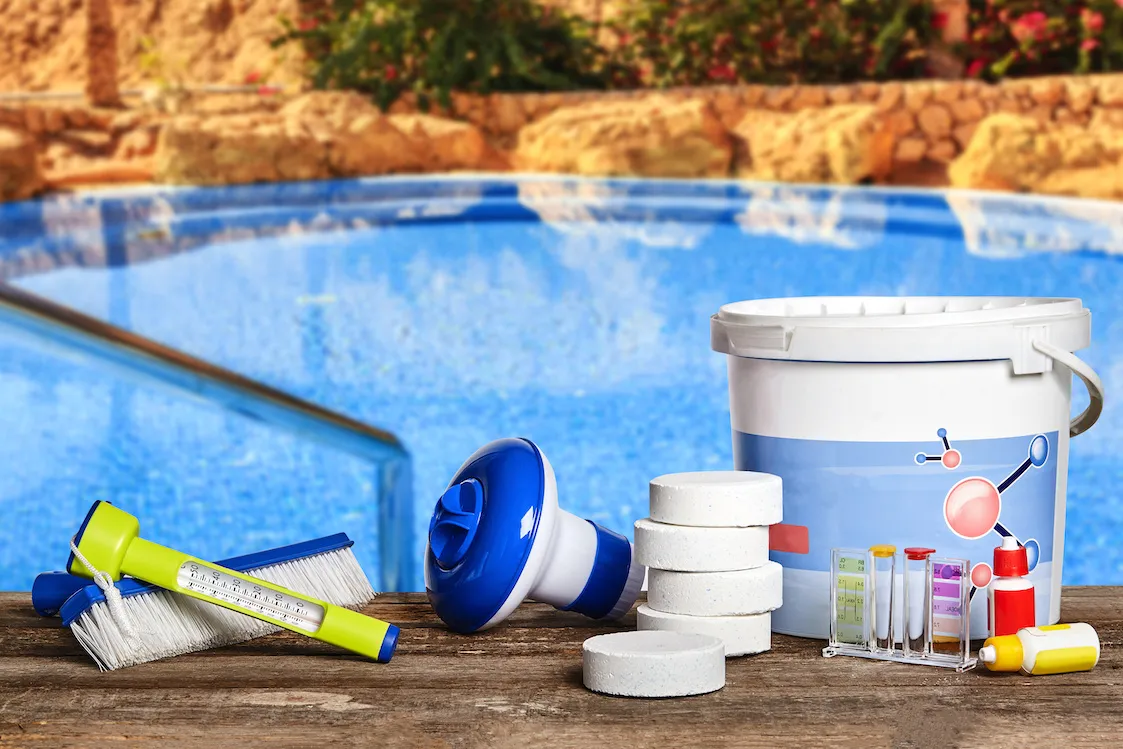
Pool water sits outside absorbing sun, rain, sunscreen, sweat, leaves, dust, pollen, and plenty more. Each of those inputs shifts the chemical balance. Without active control, water quickly turns hostile to swimmers and destructive to equipment.
Balanced water protects:
- Skin and eyes
- Pool surfaces and tile
- Pumps, heaters, filters, and plumbing
- Sanitizer efficiency
- Overall clarity and appearance
A simple test kit and basic adjustments keep everything working together. Guesswork leads to algae blooms, corrosion, scaling, and expensive repairs.
Chlorine: The Workhorse Sanitizer
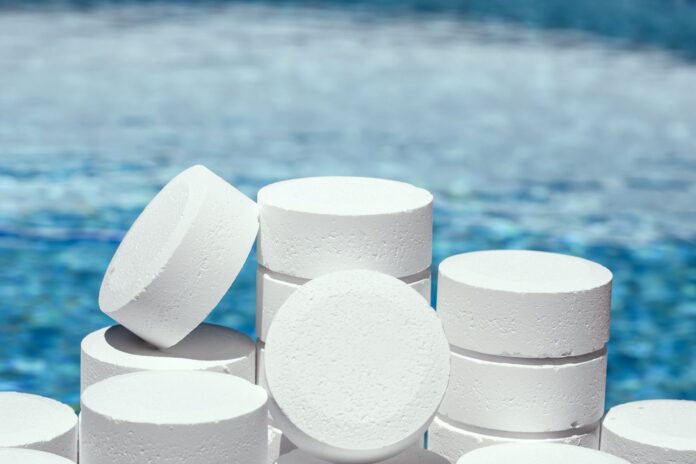
Chlorine handles sanitation. Its job is killing bacteria, viruses, algae spores, and organic contamination before swimmers ever notice a problem.
How Chlorine Actually Works
When added to water, chlorine forms hypochlorous acid and hypochlorite ions. Hypochlorous acid does most of the disinfecting work. The amount of hypochlorous acid present depends heavily on pH level, which becomes important later.
Chlorine fights contamination by oxidizing organic material. Sweat, oils, sunscreen, urine, leaves, bugs, and microscopic organisms all get broken down.
Ideal Chlorine Levels
| Pool Type | Recommended Free Chlorine Range |
| Residential | 1.0 to 3.0 ppm |
| Commercial | 2.0 to 4.0 ppm |
| Saltwater | 2.0 to 3.0 ppm |
“Free chlorine” means active, available chlorine. Combined chlorine, often measured as chloramines, represents chlorine that has already reacted with contaminants and no longer sanitizes effectively.
Signs of Poor Chlorine Control
Low chlorine often shows up as:
- Green, yellow, or cloudy water
- Slippery pool walls
- Musty or swamp-like odor
- Increased algae growth
High chlorine often produces:
- Burning eyes
- Strong chemical smell
- Faded swimsuits and liners
- Dry skin and brittle hair
The classic “chlorine smell” usually indicates chlorine working overtime because chloramines are present. More chlorine, not less, usually solves the problem.
Chlorine and Sunlight
Sunlight destroys chlorine through ultraviolet radiation. Outdoor pools lose several ppm per day without stabilizer (cyanuric acid). Indoor pools avoid UV loss but accumulate contaminants faster.
Cyanuric acid binds to chlorine and shields it from sunlight. A typical stabilizer range sits between 30 and 50 ppm for residential pools. Too much stabilizer reduces chlorine effectiveness.
pH: Comfort and Control
pH measures how acidic or basic water feels. Scale runs from 0 to 14. Pools live best between 7.2 and 7.6.
Human eyes and skin feel most comfortable near 7.4, which happens to align closely with ideal chlorine performance.
Why pH Influences Everything
pH controls:
- Swimmer comfort
- Chlorine efficiency
- Metal corrosion rates
- Scale formation
- Surface longevity
As pH rises, chlorine becomes less effective. At pH 7.2, chlorine operates near peak efficiency. At pH 8.0, more than half of its sanitizing power disappears.
Low pH creates acidic water that attacks metal components, plaster surfaces, grout, and heaters.
Visual and Physical Clues of pH Problems
| pH Condition | Common Symptoms |
| Too Low | Eye irritation, corroded metals, etched plaster, and vinyl wrinkling |
| Too High | Cloudy water, scale deposits, poor chlorine performance, and itchy skin |
Adjusting pH
- pH rises naturally from aeration, splashing, waterfalls, and heating.
- pH drops from acid rain, heavy bather load, trichlor tablets, and some shock products.
Typical adjustments involve muriatic acid to lower pH or soda ash to raise pH. Small, gradual corrections protect surfaces and prevent overshooting the target range.
Total Alkalinity: The Stabilizer Behind the Scenes
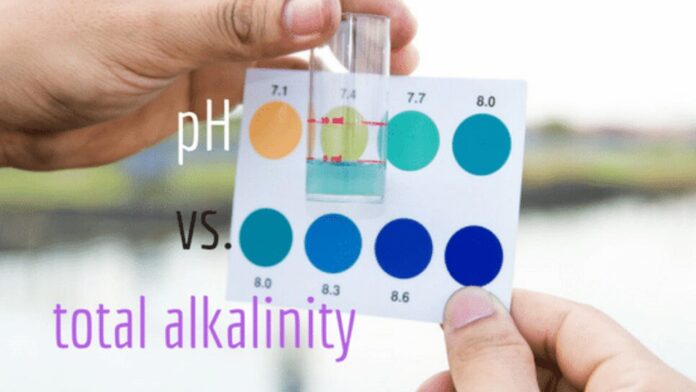
Total alkalinity works as a buffer for pH. It resists sudden pH swings caused by chemicals, rain, or bather activity. Think of alkalinity as shock absorbers for pH stability.
Ideal Alkalinity Range
| Pool Type | Recommended Alkalinity |
| Plaster pools | 80 to 120 ppm |
| Vinyl or fiberglass | 60 to 100 ppm |
| Saltwater systems | 70 to 110 ppm |
Effects of Poor Alkalinity Balance
Low alkalinity leads to constant pH drift. Owners chase numbers every few days, adding acid or base repeatedly.
High alkalinity pushes pH upward relentlessly and encourages scale formation, cloudy water, and reduced chlorine efficiency.
Managing Alkalinity Adjustments
Lowering alkalinity requires acid addition with controlled aeration. Acid lowers both pH and alkalinity. Aeration raises pH while alkalinity remains stable, allowing stepwise reduction.
Raising alkalinity uses sodium bicarbonate. Baking soda increases alkalinity with minimal impact on pH, which makes control easier.
Calcium Hardness: Structure and Protection
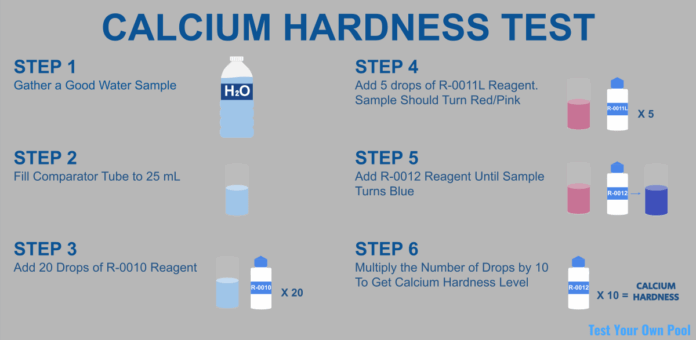
Calcium hardness measures dissolved calcium minerals. Water seeks balance with pool surfaces. Too little calcium causes aggressive water that pulls minerals from plaster, tile, grout, and concrete. Too much calcium creates scale buildup.
Ideal Calcium Hardness Levels
| Surface Type | Recommended Calcium |
| Plaster, concrete | 200 to 400 ppm |
| Fiberglass, vinyl | 150 to 250 ppm |
| Saltwater pools | 200 to 300 ppm |
Risks of Low Calcium
Low calcium leads to:
- Etching of plaster
- Rough, pitted surfaces
- Premature surface wear
- Staining and discoloration
Risks of High Calcium
High calcium produces:
- White scale on tile lines
- Cloudy water
- Reduced heater efficiency
- Clogged filters and plumbing
Managing Calcium Levels
Calcium increases by adding calcium chloride. Reducing calcium requires dilution through partial draining and refill, reverse osmosis treatment, or careful water replacement over time.
How All Four Parameters Work Together
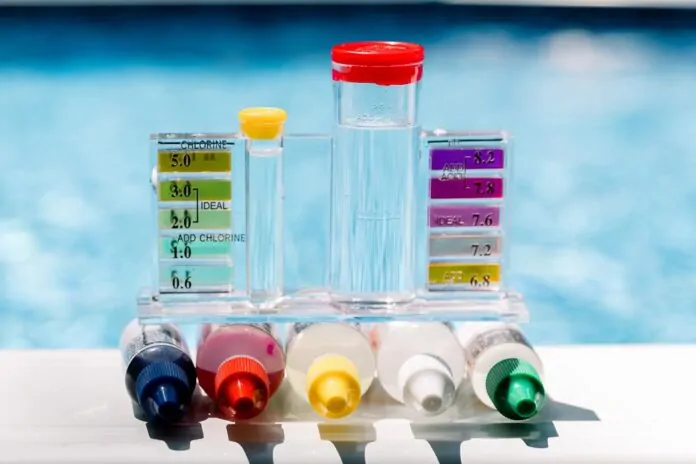
Chlorine, pH, alkalinity, and calcium influence each other continuously. Adjusting one shifts the others.
A useful evaluation tool called the Langelier Saturation Index predicts whether water tends toward corrosion or scale. Balanced water remains close to neutral.
Example: A pool with high pH, high alkalinity, and high calcium develops scale rapidly. A pool with low pH, low alkalinity, and low calcium becomes corrosive.
Balanced water protects equipment, preserves finishes, and keeps chlorine working efficiently.
Real-World Example: What Happens When Balance Slips
Consider a typical suburban pool after a rainy summer month. Heavy rain dilutes alkalinity and calcium. pH drops. Chlorine demand skyrockets due to organic debris washed into the pool.
The owner adds extra chlorine to fight algae but ignores pH and alkalinity. Chlorine loses efficiency. Algae persists. The heater core begins to corrode. Plaster shows early etching. Repair costs follow.
A simple test and balanced adjustment early in the cycle would have prevented every issue.
Mid-Season Maintenance Support
Many homeowners manage routine testing but rely on professional oversight when chemistry drifts too far. A service company familiar with regional water conditions and climate patterns offers major advantages.
Companies such as Dolphin Pool service handle advanced water balancing, seasonal transitions, equipment calibration, and emergency cleanup after storms or algae outbreaks. Professional support keeps chemistry aligned when weather and usage patterns shift quickly.
Testing Frequency and Tools
Regular testing remains the backbone of good chemistry management.
Suggested Testing Schedule
| Parameter | Frequency |
| Free chlorine | 2 to 3 times per week |
| pH | 2 to 3 times per week |
| Alkalinity | Every 2 to 4 weeks |
| Calcium | Monthly |
| Stabilizer | Monthly |
Liquid reagent kits provide better accuracy than test strips. Digital testers offer precision but require calibration and care.
Always test water before adding chemicals. Retest after circulation runs for several hours.
Seasonal Chemistry Shifts
Spring Opening
Water often emerges low in chlorine, unstable in pH, and depleted of alkalinity. Debris load spikes. Shock treatments and full balancing restore order.
Peak Summer
Sunlight burns off chlorine daily. Heavy swimmer load introduces contaminants. pH climbs from aeration. Weekly attention keeps everything stable.
Fall Closing
Balance remains important before winterizing. Proper pH, alkalinity, and calcium prevent surface damage and scale formation under the cover.
Winter
Even closed pools continue slow chemical drift. Occasional testing prevents surprises in spring.
Equipment Damage Linked to Chemistry Errors
Improper balance destroys equipment quietly over time.
| Component | Chemistry Threat |
| Heater | Low pH and low calcium cause corrosion |
| Pump seals | Acidic water degrades rubber |
| Filters | Scale clogs grids and cartridges |
| Tile and grout | Low calcium erodes, high calcium scales |
| Metal rails | Low pH rusts and stains |
Most heater replacements trace back to corrosive water conditions.
A Practical Weekly Chemistry Routine
- Test chlorine and pH
- Adjust pH to the 7.2 to 7.6 range
- Adjust chlorine to the 1 to 3 ppm range
- Empty skimmer baskets and clean debris
- Observe water clarity and surfaces
Monthly:
- Test alkalinity, calcium, and stabilizer
- Correct any drift gradually
- Inspect equipment for early corrosion or scale
Quick Reference Target Ranges
| Parameter | Ideal Range |
| Free Chlorine | 1.0 to 3.0 ppm |
| pH | 7.2 to 7.6 |
| Total Alkalinity | 80 to 120 ppm |
| Calcium Hardness | 200 to 400 ppm |
| Cyanuric Acid | 30 to 50 ppm |
Common Mistakes Pool Owners Make
Overcorrecting chemical readings creates more problems than the original imbalance. Slow adjustments win every time.
Ignoring alkalinity leads to constant pH battles.
Skipping calcium tests accelerates surface damage.
Assuming clear water means healthy water overlooks hidden corrosion or scale formation.
Relying on pool store testing without personal verification sometimes introduces inconsistent advice.
Conclusion
Pool water chemistry runs on balance. Chlorine keeps swimmers safe. pH controls comfort and efficiency. Alkalinity steadies the entire system. Calcium protects every surface and piece of equipment. Regular testing, gradual corrections, and awareness of how each element influences the others keep water inviting all season long.