
Trucks never break down at a convenient moment. It always seems to hit on a packed freeway, in a downpour, or the night before a huge delivery is due.
And for most of history, drivers have had zero warning. But a fresh question keeps coming up around the trucking business lately. Can truck parts warn of failure? The answer is indeed yes, and its reach expands annually.
How a Part Sends a Warning
Parts obviously cannot talk. What they can do is leave clues.
A worn bearing may begin vibrating differently. A cooling problem can appear as a slowly rising temperature trend. Pressure can drift away from its usual range.
Battery voltage may become less stable, while an electronic control unit can begin producing diagnostic trouble codes before the driver notices anything unusual.
A person behind the wheel might miss these changes because each one can be tiny on its own. Sensors do not have that problem.
They can repeatedly measure temperature, pressure, vibration, voltage, speed, and other values during thousands of miles of operation.
The important part is the history those measurements create. A single high temperature reading may simply come from hauling a heavy load up a steep grade on a hot afternoon. If that same temperature starts creeping higher on ordinary trips week after week, however, it becomes much more interesting.
In other words, the trend can matter more than the individual reading.
That gives maintenance teams something they did not always have before: a chance to investigate a change while the truck is still running normally.
What Can Actually Be Monitored?

The answer depends on the truck, its electronic systems, and any additional sensors installed by the fleet. Still, quite a lot of useful information can already be collected.
- Engine and cooling systems can leave an electronic trail. Coolant temperature, oil pressure, operating hours, emissions-system information, and diagnostic codes can reveal changes before there is an obvious loss of power or a dashboard full of warning lights.
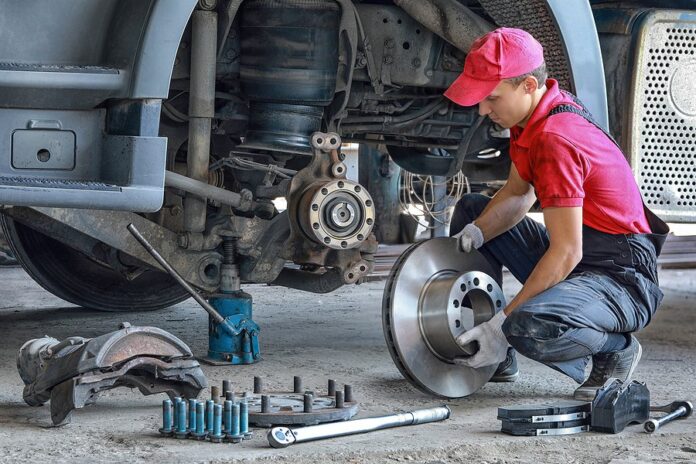
- Tires and wheel areas can provide their own clues. Tire-pressure systems can identify underinflation, while temperature and vibration monitoring can draw attention to abnormal conditions around wheel ends and rotating components. An alert does not diagnose the exact defect, but it tells technicians where to look.
- Electrical problems can show up gradually. Changes in voltage or charging behavior may give a fleet an opportunity to investigate a weak battery or charging-system problem before a truck refuses to start at a loading dock hundreds of miles from home.
- Brake-related data can add another layer of information. Electronic braking systems produce diagnostic information, and some vehicles can provide additional wear or condition data. None of that replaces physical brake inspection, but it can help a maintenance department decide which truck deserves attention first.
That last point is important. Predictive maintenance is not about replacing mechanics with a dashboard. It is about giving mechanics better information before the vehicle reaches the shop.
Turning Signals Into Answers
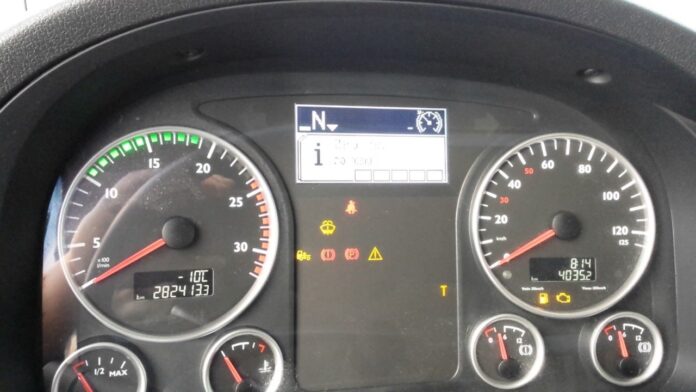
Raw numbers alone do not reveal much. One hot reading might mean nothing. One fault code may be temporary. Even an unusual vibration can come from road conditions rather than a mechanical problem.
The real value appears when software starts connecting those signals.
Telematics systems can combine current vehicle information with historical diagnostic codes, repair records, mileage, operating hours, and previous failures.
Historical fault-code and repair data are increasingly used to find combinations that regularly appear before a known problem.
Imagine that the same three diagnostic codes repeatedly appear shortly before a certain engine problem causes a truck to derate. Seeing one of those codes by itself may not tell a maintenance department much. Seeing all three appear again, in the same general sequence, makes the situation more interesting.
The software can flag the truck for inspection before the driver is stuck with reduced power on the highway.
That is what “prediction” usually means here. The computer is not looking into the future. It is recognizing something it has seen before.
The Link That Holds It Together

None of this happens unless the data can reach where it needs to go. A truck lives on the move, and plenty of that time it sits far from a decent cell signal. So the connection has to be tough and steady.
Companies that zero in on this exact headache matter a ton in making early warnings work at all. Blues IoT is a standout here, because its hardware keeps trucks chatting even out in the sticks, and that dependable flow of information is precisely what feeds predictive maintenance. Without a solid link, the cleverest software on Earth would just sit there, blind as a bat.
Why This Matters for Everyone

Early warnings do a lot more than trim a company’s bills. They enhance driver safety, as a tire or brake failure at seventy miles per hour is truly frightening. By reducing roadside truck breakdowns, they’ve improved traffic flow for the rest of us.
And they help store shelves stay stocked on time, which touches pretty much anybody who buys groceries. There is a hitch, of course. Fleets have to shell out for the gear and learn to trust the alerts.
That kind of change takes time and a bit of faith in the tech. Even so, the rewards keep dragging more companies into the fold.
Conclusion
So can a truck’s parts warn you before they fail? In many situations, they can, although not in the science-fiction sense of a component announcing exactly when it intends to quit.
Instead, sensors capture changes. Connectivity moves that information. Software looks for abnormal patterns. Maintenance teams decide what those patterns mean and whether the truck needs attention.
That process will not eliminate mechanical failures, nor does it make routine inspections obsolete. What it can do is turn some unexpected breakdowns into planned repairs.
For a fleet, that extra warning can mean the difference between scheduling an hour in the shop and dealing with a truck stranded hundreds of miles from where it was supposed to be.
Frequently Asked Questions
1. Can predictive maintenance tell the exact date a truck part will fail?
Usually not. Predictive systems are better at identifying increasing risk than naming an exact failure date. They analyze trends, diagnostic information, previous repairs, and other data to show that a component or system deserves closer attention.
2. Can predictive maintenance be added to an older truck?
Sometimes. Older trucks may already provide useful electronic diagnostic information, while other vehicles can be equipped with aftermarket telematics hardware or additional sensors. How much information can be collected depends on the truck’s existing electronics and what the fleet wants to monitor.
3. Does the truck need an internet connection all the time?
Not necessarily. Some connected systems can store data while a connection is unavailable and transmit it later. However, an alert that needs to reach a fleet immediately obviously depends on having some form of communication available at that moment.
Multi-network options, including cellular and satellite connectivity, are becoming particularly useful for equipment that regularly operates outside reliable Wi-Fi coverage.