

Cloud-based equipment rental software can connect rental transactions, asset information, service activities, billing, and financial records within a shared business system.
Useful rental software features may include equipment availability, graphical scheduling, quotations, contracts, recurring invoicing, maintenance management, mobile workflows, reporting, and financial integration.
Centralized information can give authorized employees a more consistent view of equipment, customers, contracts, deliveries, returns, repairs, and invoices. The accuracy of that view still depends on timely data entry and correctly configured integrations.
Customer portals and mobile applications can make documents and rental information easier to access. Available functions depend on the software configuration and the permissions assigned to each user.
Equipment availability and utilization reports can help managers make informed fleet decisions. They do not automatically prevent downtime or guarantee that every asset will be available when needed.
Automated purchasing or inventory alerts may support consumable items and spare parts. Rental assets still require deliberate purchasing, maintenance, transfer, retirement, and replacement decisions.
Connecting rental operations with financial management can improve visibility into revenue and asset costs. The value of those insights depends on accurate records, appropriate reporting, and consistent operating procedures.
Enhancing Operational Efficiency with Cloud-Based Solutions

Within the rental industry, information often needs to move between sales, dispatch, service, transportation, accounting, and management. When each department relies on a separate system or spreadsheet, employees may duplicate data, work from outdated records, or spend time reconciling conflicting information.
A connected ERP platform can bring those processes into a common environment. Companies evaluating cloud based equipment rental software can review Sycor.Rental, which is built on Microsoft Dynamics 365 Finance and Supply Chain Management.
Sycor.Rental connects rental management with finance, sales, service, procurement, reporting, and other business processes. It is designed for rental companies managing assets such as construction equipment, trucks, trailers, containers, cranes, agricultural machinery, tools, event equipment, medical devices, and mobile facilities.
Centralization does not automatically make a business efficient. Workflows, user roles, data standards, approval processes, integrations, and employee training must be planned during implementation.
Top Features of Leading Equipment Rental Software
The most useful functions depend on the company’s fleet, contract types, locations, and operating model. Common capabilities include:
- Rental asset management: Track assets, classifications, availability, status, and relevant history.
- Rental quotations and orders: Create offers and convert approved transactions into rental orders.
- Contract management: Maintain rental periods, rates, equipment, services, and billing conditions.
- Graphical scheduling: Review fleet availability and modify planned rental periods through a calendar-style interface.
- Check-out and check-in: Document equipment leaving and returning to the rental operation.
- Recurring invoicing: Generate periodic charges according to configured rental agreements and billing rules.
- Maintenance management: Schedule service, document repairs, and review equipment history.
- Mobile workflows: Support field activities such as deliveries, returns, scanning, meter readings, photographs, and signatures.
- Financial integration: Connect rental transactions with invoicing, accounting, fixed assets, and financial reporting.
- Analytics: Use operational and financial data to examine utilization, revenue, cost, and other performance measures.
Sycor.Rental includes these rental-specific capabilities within the broader Microsoft Dynamics 365 environment. Power BI can also be used to create reports and dashboards from available data.
Businesses should verify which functions are included in the proposed implementation. Some features may require additional licenses, configuration, integrations, or project work.
How Cloud Integration Transforms Equipment Management
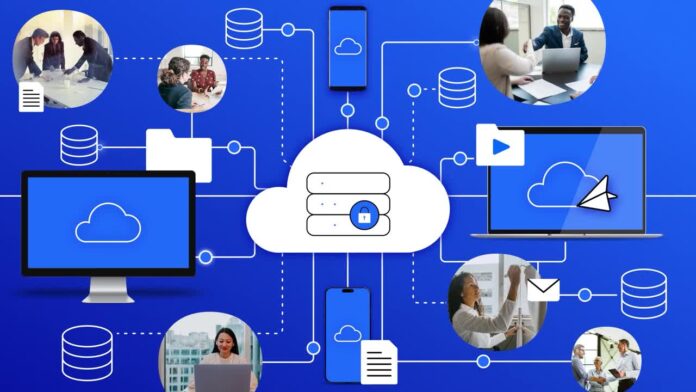
A cloud ERP system allows authorized employees to access current business information without depending on a single office server or locally maintained spreadsheet. This can be useful for companies operating across multiple branches, yards, workshops, and customer locations.
Sycor.Rental’s graphical scheduling capability allows users to view rental fleet information and create reservations, offers, orders, or workshop orders. Changes made by colleagues can be reflected in the shared scheduling view.
Its mobile application supports delivery and return activities. Employees can use scanning options, enter meter readings, document condition, attach notes and photographs, collect signatures, and email confirmations when the process has been configured for those functions.
These capabilities can improve visibility, but the word “real-time” should be used carefully. Information is only current when transactions are entered promptly and connected systems synchronize correctly. Offline work, delayed updates, incomplete integrations, and inaccurate records can all affect the information displayed.
Maintenance scheduling can help teams plan service before assigning equipment to another customer. It cannot predict every breakdown unless the company also uses appropriate condition-monitoring or telematics data and has configured processes for evaluating that information.
Raising Customer Experience Through Technology
For rental customers, a good experience often depends on clear agreements, dependable equipment, accurate billing, timely communication, and accessible documentation. Software can support these activities by giving employees a shared view of the customer and rental transaction.
Technology alone cannot create customer loyalty. Service quality still depends on equipment condition, employee responsiveness, delivery performance, pricing, issue resolution, and the accuracy of the information provided.
Personalization in Rental Transactions: A Game Changer

Centralized customer and rental records can help employees understand previous transactions, contract terms, commonly rented equipment, delivery locations, invoicing arrangements, and open service concerns.
This information may support more relevant customer service, including:
- Preparing quotations based on known requirements
- Applying approved customer-specific prices or contract terms
- Identifying equipment that has been rented previously
- Reviewing open orders and returns before responding to a request
- Providing invoices and delivery documents through a customer portal
- Coordinating service based on the customer’s current rental fleet
Sycor.Rental’s customer portal can allow customers to review rental orders and rented stock, download documents, request equipment collection, and seek changes to a rental period. These options may reduce routine calls to the back office when the portal is configured and adopted successfully.
Targeted promotions and automated marketing are not inherent results of maintaining rental records. Those activities may require CRM, marketing, consent-management, and data-governance capabilities beyond the core rental process.
Customer information must also be handled according to applicable privacy requirements and internal policies. Access should be limited to employees who need the information for their roles.
Streamlined Communication: Keeping Clients Updated
Rental software can create more consistent communication by connecting messages and documents with the underlying transaction. Depending on the implementation, customers may receive:
- Rental quotations
- Order confirmations
- Contract documents
- Delivery confirmations
- Return documentation
- Recurring invoices
- Service-related communications
- Collection information
- Account statements
The Sycor.Rental mobile app can support electronic handover confirmations and customer signatures during delivery. Employees can also document equipment condition during returns and attach photographs or notes to the return order.
The customer portal gives users another way to retrieve documents without waiting for an employee to send them manually. This can improve access outside normal office hours.
Businesses should not promise real-time delivery tracking unless transportation or telematics integrations provide that capability. Automated messages should also be reviewed for timing, accuracy, contact preferences, and legal requirements.
Optimizing Inventory Management for Rental Businesses
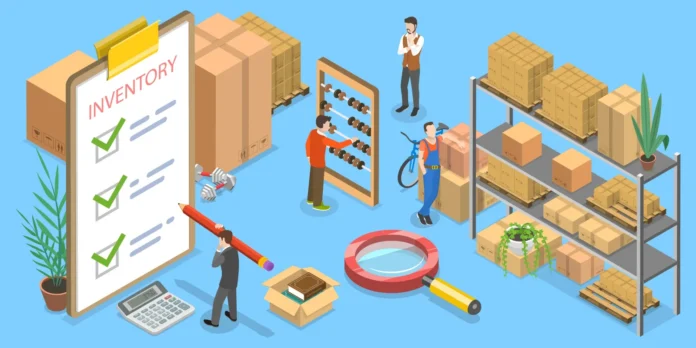
Inventory management for a rental company involves more than counting equipment. Managers need to know whether an asset is available, reserved, rented, being transported, under inspection, in maintenance, damaged, or scheduled for another transaction.
A connected system can help organize this information, but accuracy still depends on disciplined check-out, transfer, service, and return processes.
Real-Time Tracking: The Key to Availability and Performance
A shared rental platform can provide visibility into fleet status across authorized users and locations. Sycor.Rental includes asset management, availability, graphical scheduling, check-in and check-out, maintenance, and transportation functions.
Managers may use this information to examine:
- Current equipment availability
- Existing reservations
- Active rental contracts
- Planned rental start and end dates
- Equipment awaiting delivery or collection
- Assets undergoing maintenance
- Damage and repair history
- Meter readings
- Rental revenue
- Utilization measures
- Upcoming workshop orders
Software records should not be confused with GPS tracking. The location displayed in an ERP system may reflect the latest transaction or employee update. Continuous physical location tracking generally requires telematics, GPS devices, or another connected service.
Utilization reports can help identify assets that are frequently requested or seldom rented. Those findings may inform purchasing, transfer, pricing, maintenance, or retirement decisions. Managers should also consider seasonality, regional demand, equipment condition, financing, transportation costs, and strategic needs.
Automated Replenishment: Reducing Downtime and Waste
The concept of automated replenishment applies more naturally to spare parts, consumables, and saleable inventory than to large rental assets. A rental company usually does not want the system to purchase another excavator or crane automatically because a stock threshold has been reached.
Appropriate purchasing and planning functions may help teams:
- Monitor spare-part quantities
- Create alerts for low-stock items
- Prepare purchase requisitions
- Review supplier information
- Plan asset procurement
- Schedule preventive maintenance
- Record repairs and component use
- Evaluate equipment replacement needs
Sycor.Rental supports rental asset procurement and connects with Dynamics 365 Supply Chain Management. The exact level of automation depends on the workflows, approval limits, inventory policies, and configurations established during implementation.
Scheduled maintenance can reduce avoidable downtime, but it cannot ensure that equipment will remain in perfect condition. Inspections, operator reports, telematics, repair history, manufacturer guidance, and service capacity all contribute to maintenance planning.
Inventory optimization should balance availability with capital cost. Keeping too little equipment can result in missed rentals, while purchasing too much can leave capital tied up in underused assets.
Critical Insights: Cost Savings with Rental ERP Software
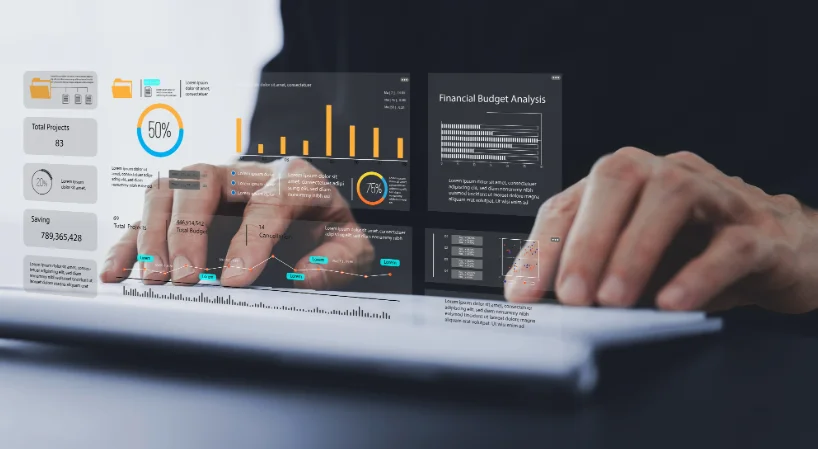
Cloud-based rental ERP software can reduce some manual work and improve access to operating information. However, cost savings and return on investment vary according to the company’s existing systems, implementation scope, data quality, adoption, and ability to redesign inefficient processes.
Licensing software without addressing operating practices may simply reproduce existing problems in a newer system.
Maximizing ROI through Efficient Resource Allocation
A connected platform can help managers evaluate how equipment, employees, service capacity, transportation, and working capital are being used. Useful measures may include:
- Fleet utilization
- Rental revenue by asset or category
- Maintenance and repair cost
- Transportation cost
- Contract profitability
- Invoice accuracy
- Days to invoice
- Equipment turnaround time
- Overdue returns
- Time spent on manual data entry
Automation may reduce repetitive work, but it does not guarantee staff reductions or immediate savings. Employees may instead use the time for customer service, fleet planning, exception management, collections, or other higher-value activities.
Return on investment should be evaluated using measurable assumptions. The business can compare implementation and operating costs with expected improvements in processing time, billing accuracy, utilization, reporting, and system maintenance.
Relevant costs may include licenses, consulting, data migration, integrations, testing, employee training, change management, support, customization, and internal project time.
Integrating Financial Management for Enhanced Decision Making
Sycor.Rental is built on Microsoft Dynamics 365 Finance and Supply Chain Management. This allows rental transactions to connect with invoicing and financial records within the same broader ERP environment.
Integrated information may help businesses analyze:
- Revenue by asset, category, customer, or branch
- Repair and maintenance expenses
- Transportation charges
- Acquisition and ownership costs
- Recurring rental invoices
- Accounts receivable
- Asset depreciation
- Contract margins
- Capital spending
- Budget performance
Power BI can be used to present information through reports and dashboards. The quality of the results depends on accurate transaction processing, consistent cost allocation, appropriate data models, and clearly defined metrics.
Forecasts should not be treated as guarantees. Historical trends may support planning, but demand can change because of weather, construction activity, customer budgets, competition, economic conditions, and other external factors.
In summary, cloud-based rental ERP software can connect asset, contract, service, transportation, and financial processes. Sycor.Rental offers rental-specific capabilities within Microsoft Dynamics 365, giving companies an option for managing more of the rental lifecycle in one environment.
Successful implementation requires careful planning. Businesses should document current workflows, define future processes, clean existing data, confirm integration requirements, establish security roles, train users, and measure results after launch.